

After learning the Finnish alphabet, one of the first pronunciation patterns you should learn is vowel length.
Many beginners think that a and aa, or u and uu, sound almost the same. In Finnish, they don’t. A double vowel is pronounced longer, and sometimes that small difference can completely change the meaning of a word.
Finnish Has Short and Long Vowels
Finnish has eight vowels:
A, E, I, O, U, Y, Ä, Ö
Each vowel can appear in two forms:
- Short vowel: a
- Long vowel: aa
The same rule applies to all Finnish vowels.
For example:
- a → aa
- e → ee
- i → ii
- o → oo
- u → uu
- y → yy
- ä → ää
- ö → öö
When you see two identical vowels together, simply hold the sound a little longer.
This video can help, just pay attention to how the vowels are different from each other.
One Extra Letter Can Change the Meaning
In many languages, vowel length is not very important.
In Finnish, however, a single extra vowel can create a completely different word.
Look at these examples:
tuli vs tuuli
- tuli = fire
- tuuli = wind
uni vs uuni
- uni = sleep
- uuni = oven
tili vs tiili
- tili = bank account
- tiili = brick
The spelling difference is small, but the meaning is completely different.
MORE EXAMPLES FROM OPETTAJA SATU LAHTONEN
Why Beginners Often Struggle
Many learners focus on vocabulary and grammar but pay less attention to pronunciation.
As a result, they may read:
tuuli as tuli
or
uuni as uni
A Finnish speaker will usually understand from context, but the words are not the same.
Learning to notice vowel length early will help you speak and understand Finnish more accurately.
Learn Through Reading
You don’t need to memorize long lists of words.
Instead, start paying attention whenever you read Finnish.
Can you spot:
- aa
- ee
- ii
- oo
- uu
- yy
- ää
- öö
The more you notice these patterns, the more natural Finnish pronunciation will become.
At the beginner level, try reading some Real Finnish on social media or Finnish websites. Instead of focusing on understanding every word, look for words with long vowels and see how often they appear. Your goal is not to understand everything yet, but to start noticing Finnish spelling patterns.
Let’s look at a few real examples.
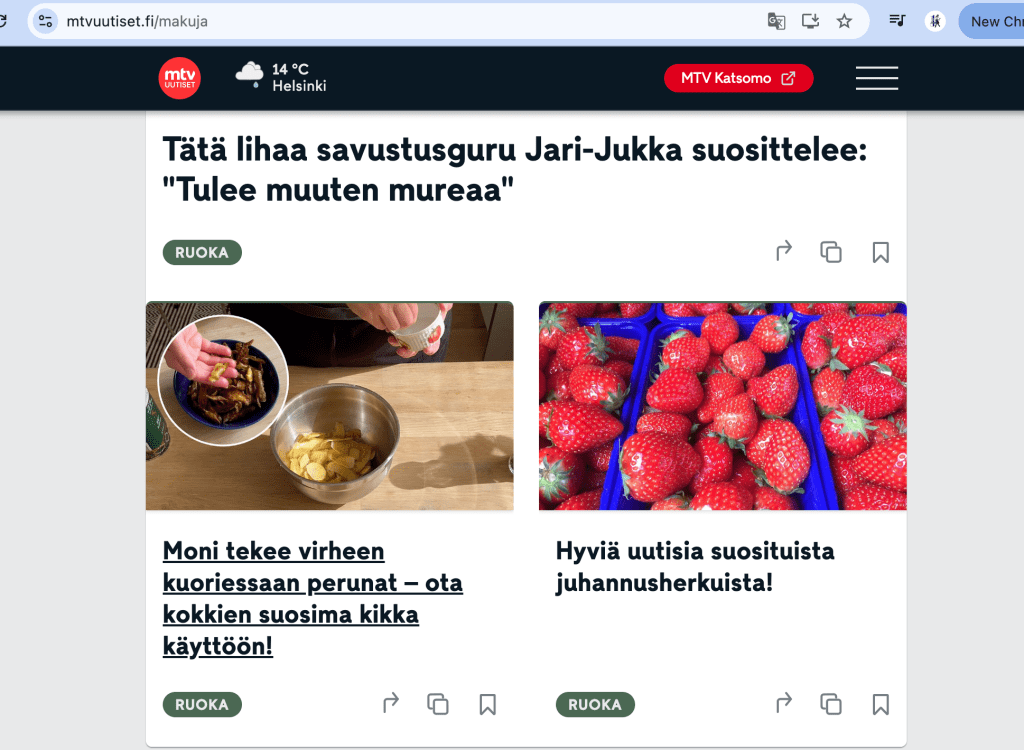
In the screenshots below, I’ve highlighted some words that contain long vowels. Don’t worry if you don’t understand the articles yet. For now, simply try to spot the double vowels and notice how common they are in everyday Finnish.

Did you find any long vowels?
Words like luuli, lääkäri, syytti, muuta, syyttää and käsissään all contain long vowels. Some have one long vowel, while others have more than one.
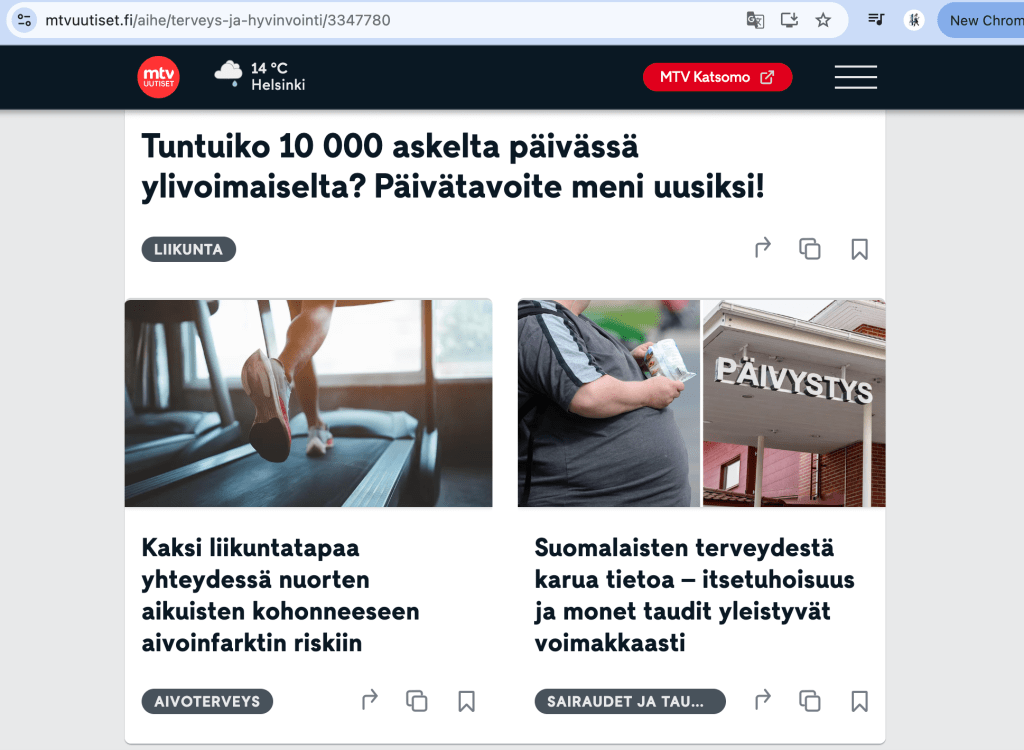
Now it’s your turn.
Look at the next screenshot and see how many words with long vowels you can find. Don’t translate—just notice the spelling patterns.
Learn Through Listening
Pronunciation is best learned by listening.
When you watch Finnish videos or listen to podcasts, pay attention to how long vowels sound.
Try to compare:
- sari– saari
- puro – puuro
- sika – siika
Can you hear the difference?
Even a few minutes of focused listening practice can make a big difference.
Long Vowels Are Everywhere
Once you start looking for them, you’ll see long vowels in many common Finnish words.
Examples:
- maa
- puu
- kuu
- sää
- jää
- aamu
- viikko
- lääke
- tyyny
- pyyhe
- pööntö
- siika
- koota
This is one reason Finnish spelling is often considered logical. What you see is usually what you hear.
Quick Test
From opettaja Satu Lahtonen
MORE PRACTICE!!!






 Learn Finnish by My Way
Jätä kommentti